The moon and the sun metaphor
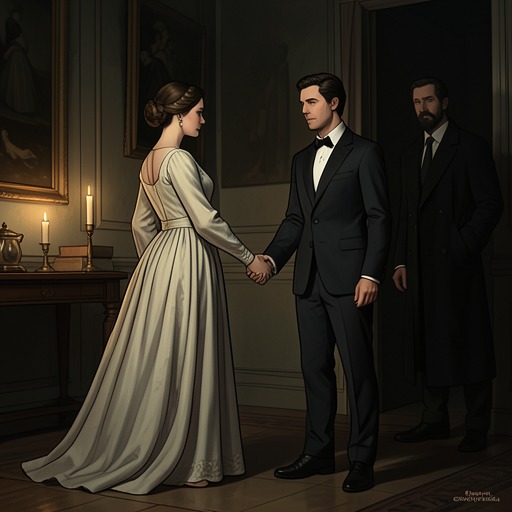
Death on the NileThe moon and the sun metaphor is a recurring image through which Jacqueline de Bellefort and Simon Doyle describe Linnet Doyle’s effect on Simon: once Linnet appeared, Jacqueline felt herself eclipsed. The image makes their shared account of a changed attachment vivid, but it does not make their interpretations of that change the same.
Jacqueline’s Explanation
When Hercule Poirot asks whether Simon had allowed himself to be bought, Jacqueline rejects the idea that he married Linnet for her money. She presents the change as more complicated: Linnet’s wealth helped create an atmosphere of glamour around her. Jacqueline describes her as a young queen in a luxurious, almost theatrical world, whose confidence and habit of command could make other people confident in her too. Against that brilliance, Simon was an obscure man suddenly chosen by one of England’s richest and most sought-after women; Jacqueline wonders whether the experience went to his head.
The moon-and-sun comparison gives this explanation its shape. Jacqueline casts herself as the moon, visible while the sun is absent but lost from sight when it appears. In her account, Simon was dazzled by Linnet and could no longer see Jacqueline. The image thus joins social contrast to romantic loss: money matters not as a direct price paid for Simon, but as part of the glamour Jacqueline believes drew him away. She insists that Simon would have loved only her if Linnet had not entered their lives, and claims that he would not have fallen in love with Linnet had Linnet not made him do so. These are Jacqueline’s convictions, not an account independently established by the metaphor.
Simon’s Reversal of the Image
Simon later uses the same comparison when Hercule Poirot asks whether any of his old feelings for Jacqueline remain. He says that, after meeting Linnet, Jacqueline ceased to exist for him, as the moon becomes unnoticeable when the sun comes out. The echo is striking: the image Jacqueline used to describe being eclipsed becomes Simon’s description of his own inattention to her.
Their agreement about the image does not mean they agree about its cause. Simon denies Jacqueline’s allegation that he married Linnet for money and says he would not marry a woman for that reason. Instead, he frames the difficulty as the effect of being cared for as intensely as Jacqueline cared for him. Jacqueline sees Linnet’s glamour and assurance as having overwhelmed Simon; Simon presents his response to Jacqueline’s devotion as difficult to explain. In both versions, the metaphor describes a change in what Simon can see, while leaving its responsibility contested.
Function and Significance
Because the image passes between the two former lovers, it registers both a shared history and a profound divide in how that history is understood. Jacqueline’s account makes the moon a figure for the woman displaced by Linnet’s radiance; Simon’s turns the same relation into an explanation of why Jacqueline no longer mattered to him. Its apparent simplicity conceals the disagreement: neither speaker disputes that Linnet eclipsed Jacqueline in Simon’s attention, but they assign that change different meanings.
The image also condenses the contrast Jacqueline draws between Linnet’s commanding, privileged presence and her own lost place in Simon’s life. It is not proof that Simon was bought, nor a neutral account of why he changed; it is a memorable form for the competing claims each makes about love, glamour, and choice.